

Trauma, Faith, and the Jewish Nervous System
By: Elka Cohen
For generations, the Jewish people have lived with a collective memory shaped by exile, persecution and survival. Some memories are passed down through our stories, rituals, and prayers. Others are carried more quietly – in the tension we live with, the vigilance we inherit and the breath we unconsciously hold. It is a legacy forged through centuries of antisemitism, from pogroms to the Holocaust and beyond. Trauma can feel ingrained in our very being. Not every family carries these memories in the same way, but history continues to shape how many Jews experience the world today.
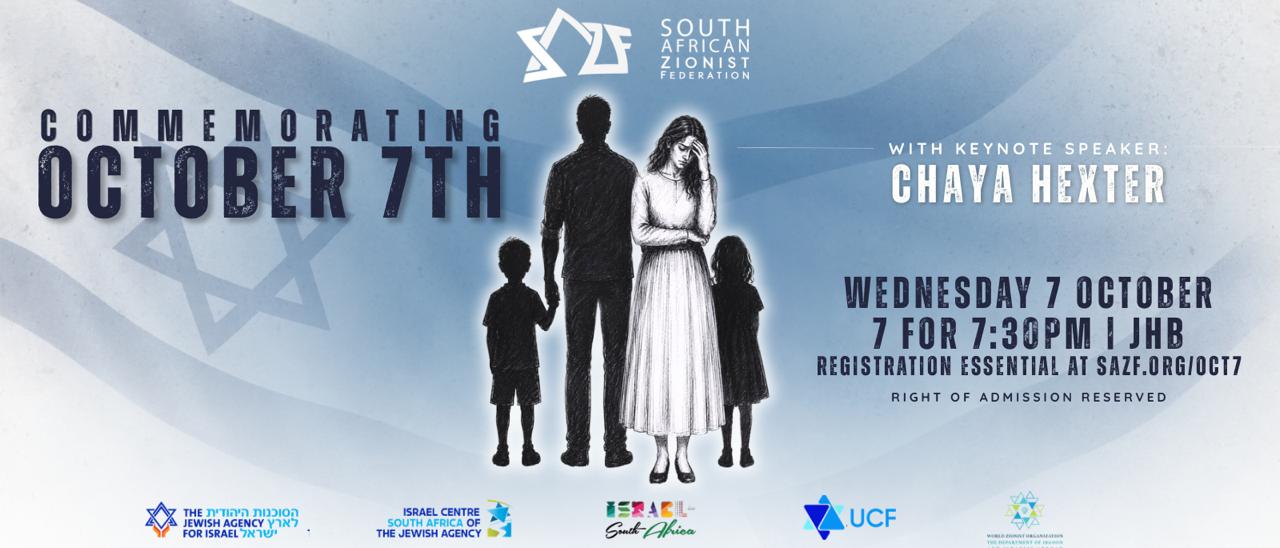
Three years after October 7, Jews around the world are still living in a state of held breath. That day felt as though history had collapsed in on itself, reopening wounds that reached far beyond the event itself. It wasn’t simply something unimaginable that had occurred; it was the unsettling recognition that what many believed belonged to history had become a frightening present-day reality. October 7 did not just create new fear; it reawakened generations of trauma. The surge in global antisemitism that followed, across university campuses, on social media and in cities around the world, further shattered assumptions of safety and belonging. But still, life carries on. Children go to school, businesses run, Shabbat candles are lit and festivals are celebrated. However, living in a constant state of vigilance takes its toll. Fear does not live only in the mind; it settles into the body. We cannot simply think our way out of a nervous system that has learnt to survive.
When Trauma Lives in the Body
Most of us are unconscious breathers, paying little attention to our breath until we struggle to catch it. In moments of stress, our breathing becomes shallow and rapid, keeping the body locked in a cycle of fight, flight, or freeze. Over time, this constant state of alertness can affect everything from sleep and concentration to digestion, immunity, and emotional and mental wellbeing.
Trauma does more than leave us frightened; it disconnects us from our bodies, from one another and, most importantly, from ourselves. Living in survival mode narrows our world. Joy becomes harder to access. Rest can feel unsafe. Even moments of peace can feel unfamiliar, as though the nervous system is still bracing for danger. We have recognised these feelings intuitively for years, but healing begins by helping the body remember what safety feels like.
Breathing as a Way Back
Johannesburg-based breathwork practitioner Abi Berkowitz is part of a global network of IMD Breathwork facilitators offering sessions in cities around the world. She believes many of the ways we experience stress are not simply mental, but deeply physical. “Most people don’t realise how much energy they’re using just to hold themselves together. The clenched jaw, tight shoulders, the racing mind at 3am, or the exhaustion that doesn’t disappear after a good night’s sleep – these aren’t character flaws. They’re often signs of a nervous system that’s been in survival mode for so long that it has started to feel normal.”
“The clenched jaw, tight shoulders, the racing mind at 3am – these aren’t character flaws.”
She explains, “Our nervous system learns patterns of protection. We stay stuck in cycles of tension, hypervigilance or shutdown. Breathing offers a unique way to interrupt these patterns.”
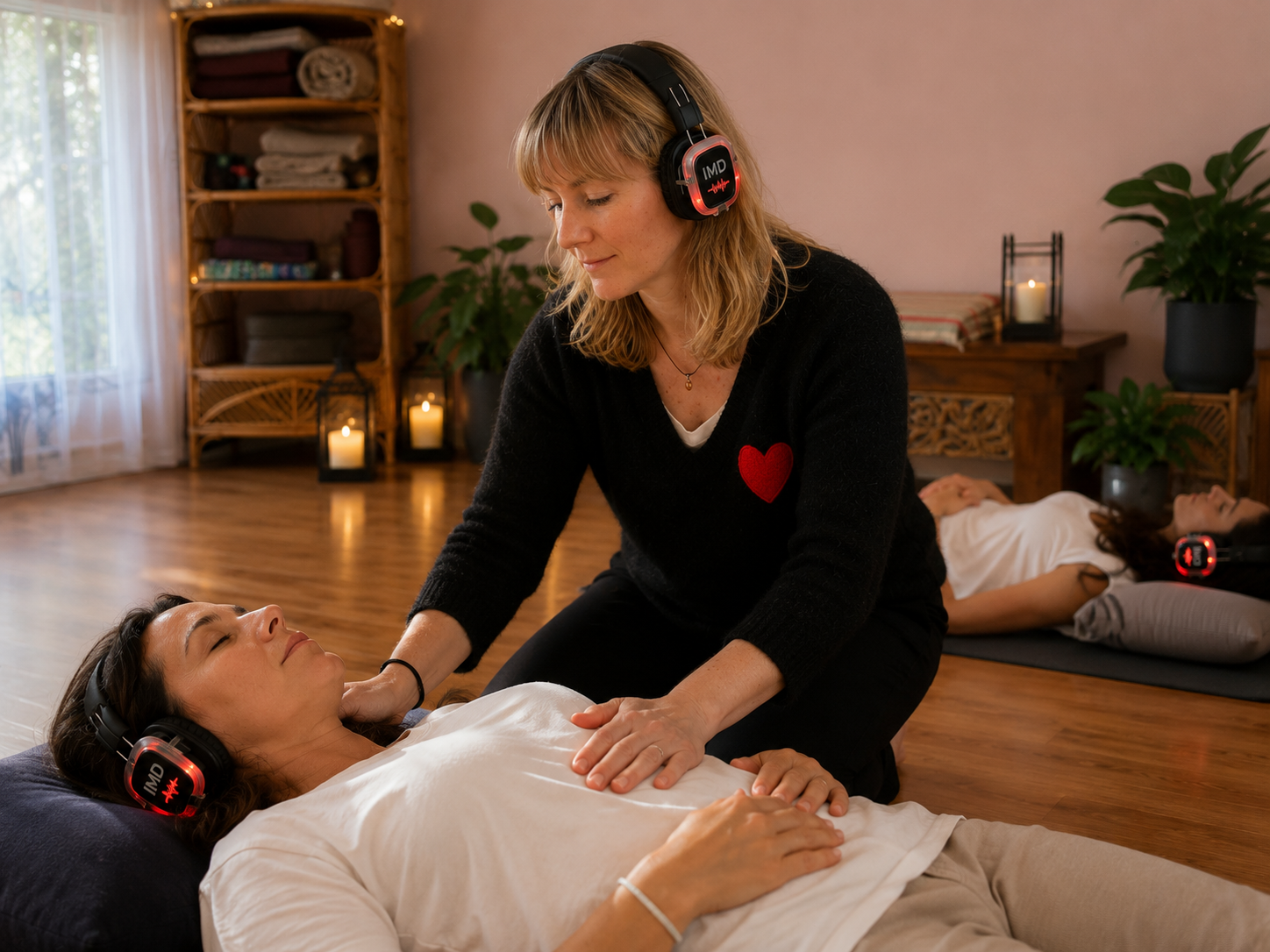
During Abi’s immersive sessions, participants wear an eye mask and headphones and are gently guided inward, free from distraction or performance. Within this safe space, the body is given permission to do what it was designed to do. Sometimes the shift is subtle – a deep sigh, muscles softening, tension dissolving, or a quiet sense of calm. Other times it comes through tears, trembling, or the release of long-held emotions. No two experiences are the same, yet each reflects the body’s remarkable capacity to heal when it feels safe enough.
“Healing isn’t about becoming someone new; it’s about remembering who you were before.”
“One of the greatest privileges of my work is witnessing the moment someone realises they don’t have to keep carrying what they’ve been carrying. Time and again, I see people reconnect with parts of themselves they thought they’d lost beneath years of stress, responsibility and survival. My own breath has been my anchor through every season of my life: from motherhood, to supporting my son through a rare condition, to navigating divorce, to rebuilding my life and finding joy again. Healing isn’t about becoming someone new; it’s about remembering who you were before your nervous system learnt it had to stay on high alert.”
Breathwork is not only for moments of crisis. Whether navigating everyday stress, recovering from loss, processing change or simply seeking greater presence, it offers a practical way to strengthen the nervous system’s capacity to adapt and recover. Integrative medical doctor Dr Ela Manga has long described conscious connected breathing (CCB) as one of our most accessible tools for restoring calm in uncertain times. Healing, she suggests, does not mean forgetting, becoming untouched by grief or immune to fear. Rather, it is the gradual process of reconnecting with ourselves, with those we love and with the moments of gratitude and joy that survival so often pushes aside. Breath offers a doorway back.
Elizabeth, a legal professional, life-transformation coach, and mother of two, shares her experience. “Twenty years of unexplained food intolerances eventually became debilitating inflammation that affected every part of my life. I discovered IMD Breathwork, and in my first session I set the intention to heal my repressed anger and resentment because I understood these to be contributing to my gut and digestive issues. I walked in angry. I breathed. I integrated. I did the work. Two hours later, I walked out knowing something had shifted. Even after one session I felt calmer, less angry. I felt like a new person, and the people closest to me noticed the change too. I didn’t develop my health challenges overnight, and I don’t expect to heal overnight. But after four sessions, I’ve been able to reintroduce most foods into my diet. I’m so grateful for a process that allowed my body to do what, I believe, it already knew how to do.”
Elizabeth’s experience is not unique. For certified breathwork practitioner Niki Seberini, the journey began during the COVID-19 pandemic when her husband became seriously ill and she found herself overwhelmed by anxiety. “My nervous system was stuck in fight-or-flight,” she recalls. Desperate for relief, she began practising a simple breathing technique, extending her exhale to calm her body. “Instantly, the panic would subside.” That experience led her to explore Conscious Connected Breathing and the science behind it, revealing what she now believes many of us overlook.
“The most powerful tool for restoring health has been with us all along.”
Niki says, “The most powerful tool for restoring health has been with us all along. The breath is our most untapped resource, and the missing pillar of human health and wellness,” adding, “If you want to change how you feel, start by changing how you breathe.” Breath is not only a tool for physical and mental wellbeing; it carries profound spiritual significance. “There’s more to breathing than just survival,” Niki affirms. “We are wired to experience expanded states of consciousness. Breath connects us more deeply to ourselves – and ultimately, to Hashem.”
A Bridge to Faith
Trauma shapes how we respond to danger, but it also fundamentally influences our capacity to trust. Breathwork does not replace prayer or explain suffering. What it may do is quiet the body enough for Emunah – a state in which presence and spiritual connection feel more accessible.
Long before modern science began exploring the profound connection between breath, body and mind, Judaism recognised breath as something sacred. The Hebrew words for soul – nefesh and neshama – both derive from the root for breath, reflecting its role as both the sustainer of life and a bridge to the Divine. Just as breath sustains us physically, it can also draw us more fully into prayer.
Judaism has always understood the importance of returning. Every Shabbat invites us to step out of striving and into rest. Every prayer calls us back into relationship – with ourselves, with one another and with Hashem. In many ways, conscious breathing offers a similar invitation. It is not a replacement for Jewish practice or faith, nor does it answer life’s hardest questions. What it offers is a simple way to calm a body caught in vigilance. As we approach Rosh Hashanah, the sound of the shofar will once again call us to awaken. It is a call to reflection, return and renewal. Perhaps it is also an invitation to notice something more fundamental: the breath that carries its ancient cry, the same breath that can gently bring us back to ourselves.
“Breath isn’t something we need to learn – it’s something we need to remember.”
Perhaps this is why breath feels so significant right now. It reminds us that while we cannot always control the world around us, we are not entirely powerless within it. We may not be able to change the headlines, erase inherited grief or guarantee tomorrow’s safety. But we can choose, even briefly, to return to the present moment. As Abi reminds us, “Breath isn’t something we need to learn – it’s something we need to remember.”